
Wantagh Morton Lodge No. 63 F&AM

About Jacob Morton
Deputy Grand Master and Early American Statesman
Morton Lodge No. 63 was named in honor of Jacob Morton, a prominent leader in early New York Freemasonry and public life. Our charter, the official document authorizing the lodge to operate, was issued under the leadership of distinguished figures in New York Masonry, including Robert R. Livingston and DeWitt Clinton. Their involvement places the founding of our lodge within a remarkable period of civic and Masonic development in the young Republic. The brief biographies below provide context for the legacy connected to our lodge since its charter was granted.
Jacob Morton
A Statesman, Mason, and Builder of a Young Nation

Jacob Morton was born on January 30, 1761, in New York City, just as tensions were rising between the American colonies and Great Britain. He came of age during the Revolution and spent his adult life helping shape the civic structure of a new nation. He died on April 28, 1836, having witnessed the transformation of the United States from fragile experiment to established republic.
Morton devoted much of his professional life to public service. He served for decades as Clerk of the Common Council of New York City, a role that placed him at the administrative heart of one of the fastest-growing cities in the country. In an era before modern infrastructure and bureaucracy, the work demanded precision, diplomacy, and steady judgment. Morton earned a reputation for reliability and disciplined leadership, qualities that defined both his civic and Masonic careers.
In 1789, he was appointed Grand Marshal for the inauguration of President George Washington in New York City, then the nation’s capital. The position was more than ceremonial. It required coordination, organization, and the trust of civic leaders at a pivotal moment in American history. Morton stood at the intersection of public life and emerging national identity.
Within Freemasonry, he rose to the office of Deputy Grand Master of the Grand Lodge of the State of New York. During the early years of the Republic, Masonry was closely tied to civic leadership, moral development, and community building. Morton’s influence helped guide the Craft through that formative period.
When Morton Lodge No. 63 was chartered in 1797, the brethren chose to name the lodge in his honor not simply because of his title, but because he represented the kind of man they aspired to be: principled, engaged in public life, and committed to strengthening both fraternity and community.
Today, his name serves as more than a historical reference. It stands as a reminder that leadership is measured not only by position but by steady service over time.
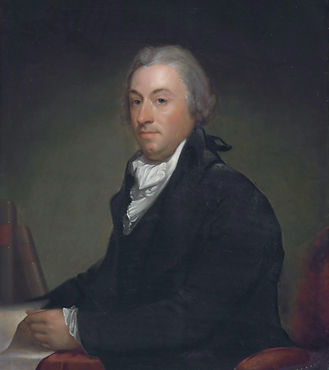
Robert R. Livingston
Chancellor, Diplomat, and First Grand Master of New York
.jpg)
Robert R. Livingston was born on November 27, 1746, in New York and died on February 26, 1813. A member of one of New York’s most influential families, he became one of the most important civic and Masonic leaders of the early United States.
Trained as a lawyer, Livingston quickly rose to prominence during the Revolutionary era. He served in the Continental Congress and was part of the committee that drafted the Declaration of Independence. Although he was called back to New York before he could sign the final document, his role in shaping it places him among the architects of American independence.
In 1777, he was appointed Chancellor of the State of New York, the highest judicial office at the time. He held that position for nearly twenty-four years. In that capacity, he administered the oath of office to George Washington at the first presidential inauguration in New York City in 1789, standing at the center of a defining national moment.
Livingston later served as United States Minister to France under President Thomas Jefferson. While in Paris, he played a decisive role in negotiating the Louisiana Purchase in 1803, a diplomatic achievement that doubled the size of the United States and reshaped the nation’s future.
Within Freemasonry, Livingston became the first Grand Master of the Grand Lodge of the State of New York in 1784. His leadership helped establish structure, credibility, and direction for Masonry in the new republic. Under his guidance, the fraternity grew alongside the nation it served.
Robert R. Livingston’s life reflects the close connection between civic leadership and Masonic principles in the founding generation. His legacy endures in the institutions he helped shape and in the fraternity he helped strengthen.
DeWitt Clinton
A Visionary Leader and Builder of Public Institutions

DeWitt Clinton was born on March 2, 1769, in Little Britain, New York, and died on February 11, 1828. He rose to prominence during a period when the United States was defining its identity, and he became one of the most influential public figures in New York’s early history.
Clinton began his career in national politics as a U.S. senator and later served multiple terms as Mayor of New York City. His lasting impact, however, came during his service as Governor of New York.
As governor, Clinton championed the construction of the Erie Canal. The proposal was bold and widely criticized, with opponents dismissing it as impractical. Clinton remained committed to the vision. When the canal opened in 1825, it transformed commerce, strengthened New York’s economy, and helped position New York City as a leading center of trade. The project demonstrated his belief that long-term progress required courage and persistence.
Within Freemasonry, Clinton served as Grand Master of the Grand Lodge of the State of New York for many years, guiding the fraternity through a period of expansion and increased public presence. He encouraged education, civic engagement, and organizational strength within the Craft.
DeWitt Clinton’s legacy reflects disciplined leadership combined with forward thinking vision. His career illustrates how public service, infrastructure, and principled fraternity could work together to shape a growing nation.